
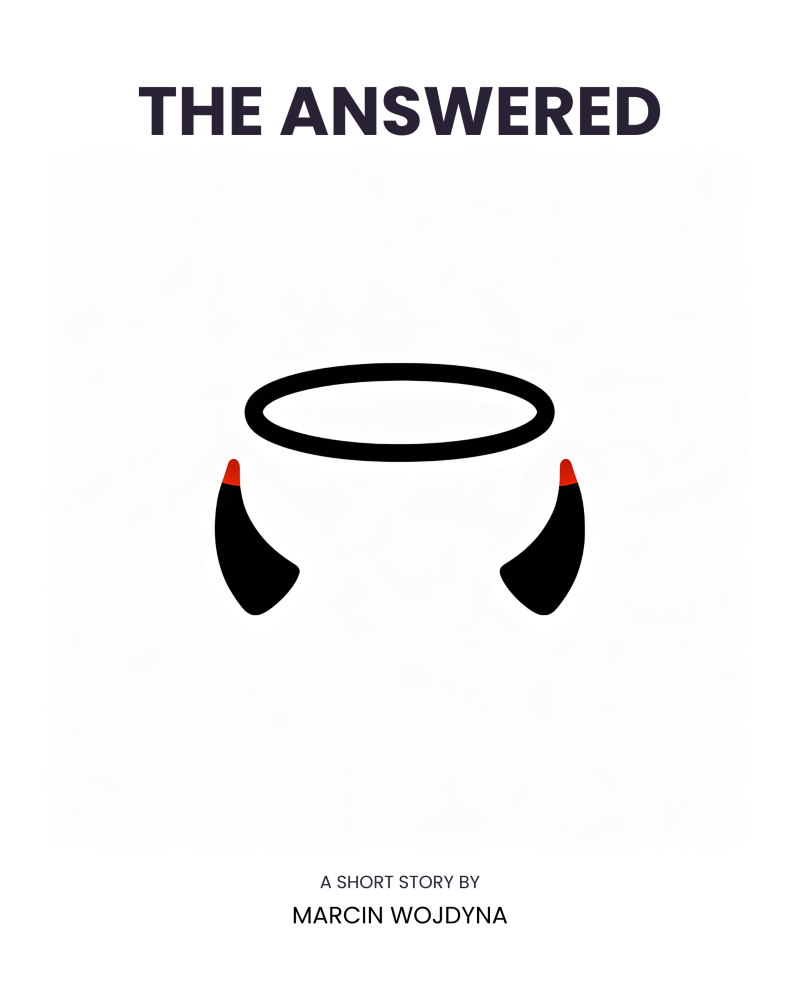






It began, as most things do, with parking.
A man in Bracknell prayed for a space near the office. The SUV in front of him blew a tyre, swerved into a lamppost, and left the slot free. The man called it a miracle. The driver called an ambulance. By lunchtime, the story was on the news. By dinner, it was a movement.
The churches filled overnight. Pastors, vicars, priests, imams, rabbis, televangelists, life coaches. All of them smiling wider than they ever had before. Their sermons were no longer about faith. They were about results.
The faithful boasted. “Ask, and you shall receive,” they said, as if the words had just been proven. One prayed for sunshine at a wedding, another for rain on a neighbour’s barbecue. Both got what they wanted, for an hour each. The sky flickered like a faulty bulb. Nobody seemed alarmed.
The atheists scoffed at first. “Coincidence,” they muttered, or “mass delusion.” But when their cars broke down, their houses flooded, their children stumbled sick into hospital wards, the laughter caught in their throats. The faithful had begun to pray not only for blessings but for punishments. They prayed against their neighbours, their critics, anyone who had once laughed at them for kneeling.
And the prayers worked.
Or so it seemed.
The first stories sounded small. A teacher in Bristol, known for mocking religion in her classes, woke up mute. A surgeon in Glasgow dropped his instruments mid-operation, hands jerking as if pulled by strings. A journalist in Birmingham lost his sight while writing a column titled The Last Illusion. The faithful didn’t mourn them. They nodded. Proof.
It did not stay small.
A congregation in Belfast prayed a rival church into foreclosure. A mayor in the Midlands prayed an opponent’s house into flames. Families prayed against other families. Whole streets turned hostile overnight.
I saw it happen close-up. My neighbour used to nod politely at me when I carried my shopping in. She started glaring after I mentioned I didn’t believe. One morning I found my bins overturned, rubbish scattered across the pavement. She leaned out her window and smiled.
“Funny, isn’t it? The wind only ever blows your way.”
I knew it wasn’t the wind.
At work, my manager began forgetting my name. I’d sit in meetings and watch him skip me, calling on others. Later, at the pub, a colleague leaned close and said, “You should pray more. Might help people remember you exist.”
They laughed. I didn’t.
The world fractured. Traffic lights glitched between green and red until pile-ups became routine. Shops emptied overnight when believers prayed supplies away from “undeserving” hands.
Hospitals turned into warzones, patients recovering one day only to relapse catastrophically the next. Nobody prayed for healing unless it was their own. Nobody prayed for peace.
And still the temples swelled. The louder the hymns, the sharper the curses. Children were taught to fold their hands and whisper against classmates. Parents stood in doorways, smiling while their enemies’ windows shattered without a stone.
I did not pray.
I watched the world tear itself apart. I watched the faithful laugh as they cursed each other, too addicted to stop. A man stood over his fallen neighbour, triumphant. A woman watched her rival collapse in a supermarket aisle and called it justice. Children cheered when a classmate tripped on invisible wires.
That was the final proof.
It was never God who answered. There was no one listening. It was only us, dragging reality down to match the size of our grudges. The faithful proved themselves no better for believing. They proved they had only ever been restrained by fear. Without it, they prayed with teeth bared.
The rest of us simply endured, until there was nothing left to endure.
And that was the miracle after all: that when offered the chance to be better, we chose worse, and called it faith.