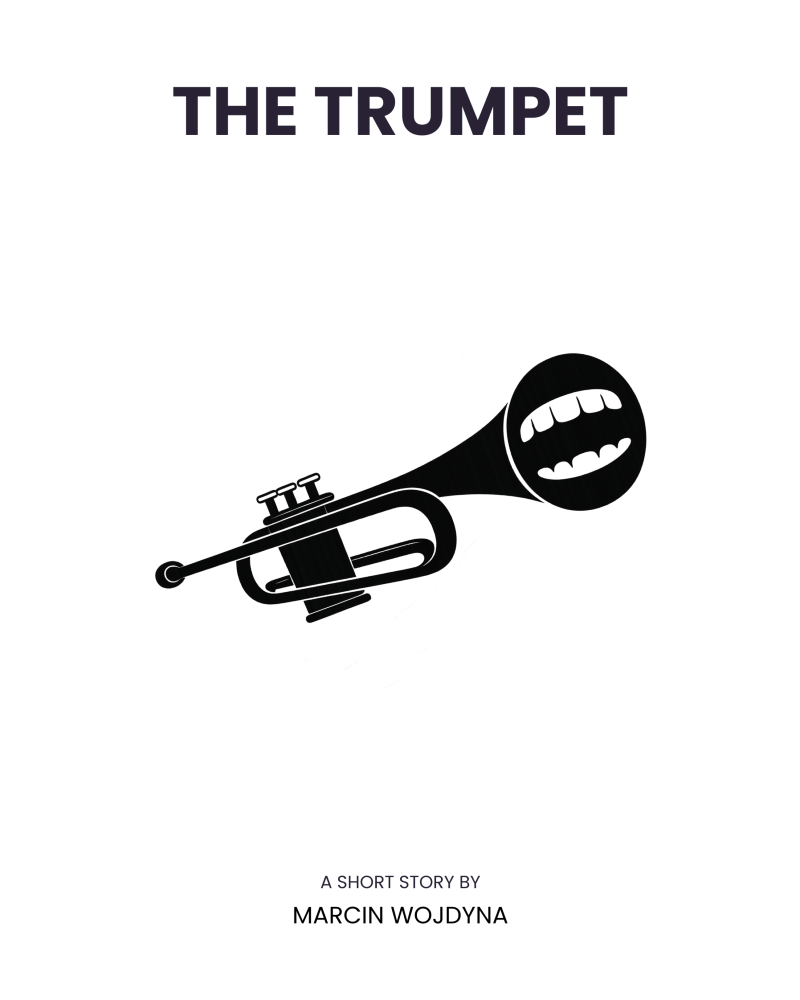
It began as an instrument. Brass. Shiny. Hollow. Tuned to nothing in particular.
It could not read music. It did not know notes, scales, or restraint. It did not understand harmony, timing, or when to stop. But it could be loud. Louder than anything else in the square.
At first, people laughed.
The trumpet honked and blared, splitting the air with notes that bent the wrong way. Children covered their ears. Musicians frowned. Someone said it was embarrassing. Someone else said it was funny. Someone filmed it.
The trumpet took this as encouragement.
It learned quickly that volume covered mistakes. That repetition passed for confidence. That if it blasted the same three notes often enough, people stopped noticing they were wrong.
Other instruments tried to intervene.
The violin explained subtlety. The piano suggested structure. The flute demonstrated beauty. The trumpet drowned them out. It did not argue. It did not listen. It simply played louder.
People gathered.
Not because the trumpet sounded good, but because it was impossible to ignore. Silence felt like surrender. Paying attention felt easier than thinking.
The trumpet began to play slogans. Short notes. Simple rhythms. Tunes you could hum without understanding. It repeated them until they felt familiar. Familiar until they felt true.
Some pointed out that the trumpet had no melody. No depth. No idea what it was doing. The trumpet responded by playing louder, accusing the other instruments of being elitist, boring, and out of touch.
The crowd applauded.
Soon the trumpet was no longer just an instrument. It was a spectacle. A personality. People stopped asking whether it was right and started asking whether it was winning.
The trumpet declared itself the greatest trumpet anyone had ever heard. It said so constantly. It said it until others repeated it for it.
Other instruments tried again.
The cello warned that constant noise damages hearing. The oboe said nothing good comes from drowning out expertise. The trumpet called them weak and played louder.
The crowd cheered.
Some followed because they liked the noise. Some because they hated the silence it threatened. Some because they enjoyed watching smarter instruments fail to be heard.
A few followed because the trumpet told them it was on their side. It told them their ears were the best ears. Their taste the best taste. Anyone who disagreed did not understand music.
Eventually, the trumpet was placed on the main stage.
It had never asked for this, but it had never refused anything either. From there, it could blast across the square. It could drown out entire orchestras. It could make disagreement physically uncomfortable.
People stopped bringing other instruments. There was no point.
The trumpet promised great concerts. The best concerts. Concerts like nobody had ever seen. It did not deliver them. It blamed the acoustics. It blamed the audience. It blamed sabotage.
Still, it played.
Those who complained were told they hated music. Those who left were told they did not matter. Those who stayed were rewarded with more noise.
Eventually, something strange happened.
The trumpet began to crack.
Brass warps when overused. Valves stick. Sound thins. Sharpens. Desperation replaces confidence.
The trumpet compensated the only way it knew how.
Louder.
By then, many could hear nothing else. Their ears rang even in silence. They mistook the ringing for music. They mistook exhaustion for loyalty.
A few noticed that the trumpet had never learned a new note. That it had never improved. That it had only amplified itself.
They tried to say so.
The trumpet played over them.
And most people followed. Not because it was right. Not because it was good. But because it was loud, and loud felt like leadership when thinking felt like work.
In the end, the trumpet did not destroy music.
It made people forget why they listened in the first place.
And when the square was left ringing and empty, the trumpet continued to play to itself, convinced the silence meant victory.